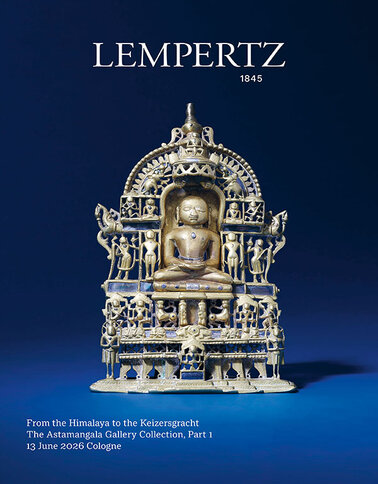
Tradition, Modernity and a Gallery Collection in the Asian Art Auction at Lempertz on 13th June
Artistic virtuosity and iconographic depth characterise the selection of Asian art assembled for this auction. The works date from the 7th to the 20th century and thus span two millennia of East Asian cultural history. A particular highlight is the collection from the Amsterdam-based Astamangala Gallery, featuring art from the Roof of the World.
Tibetan art forms a particular highlight of the auction: Lempertz is auctioning the collection of the Astamangala Gallery. The gallery was the life’s work of Sjoerd de Vries, who passed away last year, and an institution on Amsterdam’s Keizersgracht; its collection was the result of personal passion, travels to the Himalayas and the great expertise that grew from this experience. In the first part, which will be auctioned on 13th June, 58 items from this gallery will be sold.
Among these is an exceptional pair of temple hangings made of silk brocade using an elaborate appliqué technique, created around 1900 in Tibet; the sheer scale of the work highlights the significance of textile decoration in Buddhist sacred spaces. The richly decorated compositions depict guardian deities on their mounts, surrounded by dense foliage, lotus motifs and auspicious symbols. The pair is offered with an estimate of €20,000 to €25,000.
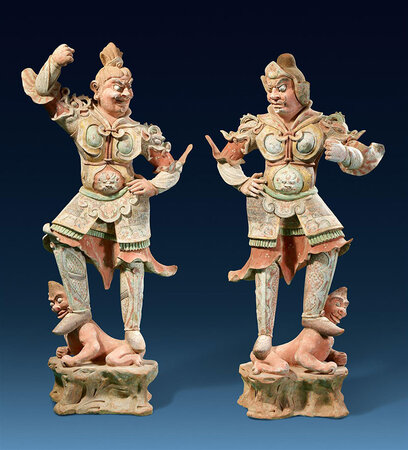
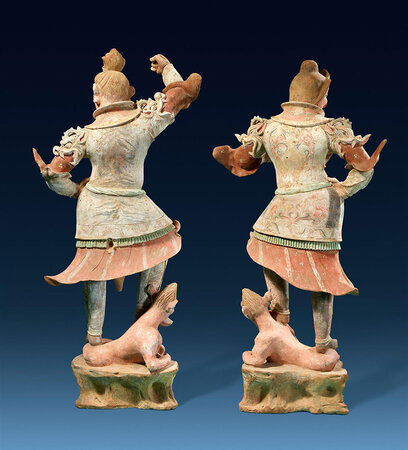
This auction opens with a journey through millennia of China’s rich art history, featuring a pair of terracotta Lokapala guardian figures from the Tang Dynasty (618–907). The polychrome figures stand in commanding poses on rock-shaped plinths, each trampling a defeated demon. In their richly decorated armour, featuring dragon-mouth sleeves and mask motifs, they present themselves as powerful subduers of evil spirits. Estimate for the pair: €80,000 to €100,000. Also dating from the Tang period and entrusted with a very similar role are the two sancai guardian figures of the zhenmushou type. Depictions of these mystical beings were placed in the graves of the deceased to protect their peace.
Dating from the later Song period (1126–1279) is a pendant carved from celadon-coloured jade, known as a pei. This gem is remarkable for its exquisite carving, evident in the finely openwork design in the form of a stylised dragon with a dynamically coiled body. This detailed piece will be offered on 13th June with an estimate of €15,000 to €20,000.
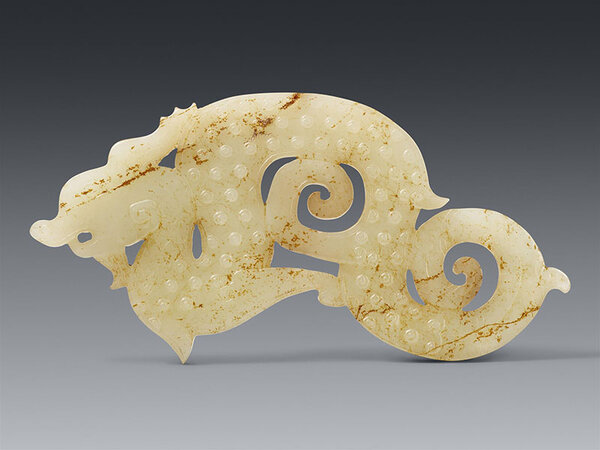
Song Dynasty (1126–1279). H 6.5 cm; L 10.3 cm. Estimate: € 15,000 – € 20,000
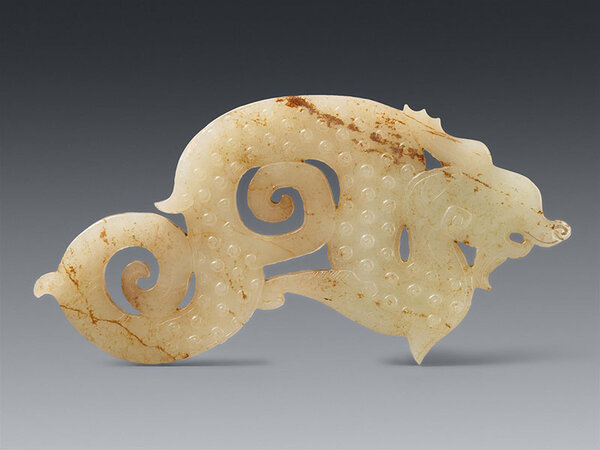
In addition to the pendant (Lot 145), a rare gui sceptre (€6,000 to €8,000), a ding-type ritual vessel (estimated at €15,000 to €20,000) and a horizontal scroll depicting bamboo and birds (estimated at €20,000 to €30,000) are also likely to attract considerable interest. These pieces form part of a selection of archaic objects from the collection of the diplomat Ernst Arthur Voretzsch (1868–1965), from which Lempertz has already had the privilege of auctioning numerous significant pieces in previous sales.
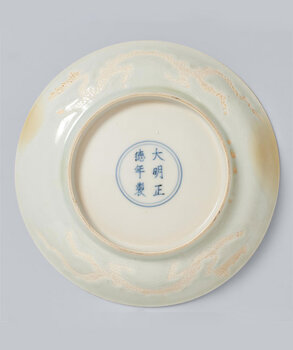
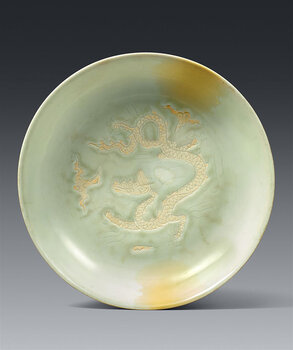
An imperial dragon bowl bearing the Zhengde mark and dating from the period 1506–1521 is one of the finest examples of early Ming porcelain. The shallow, saucer-shaped bowl features a descending five-clawed dragon carved into the body, set against a background of recessed cloud patterns beneath a slightly greenish glaze. Two further dragons adorn the exterior; estimated price €10,000 to €15,000.

Examples of Japanese art in the auction bridge the gap between tradition and modernity.
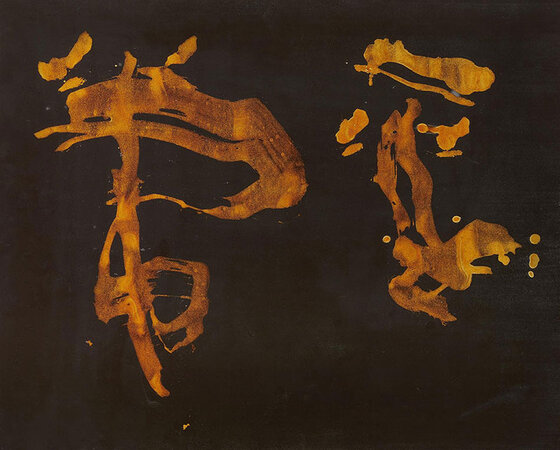
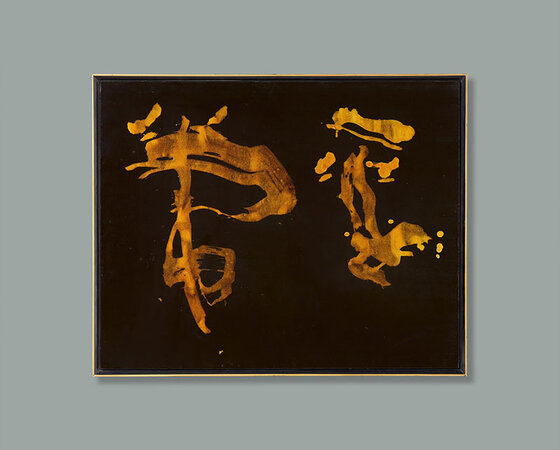
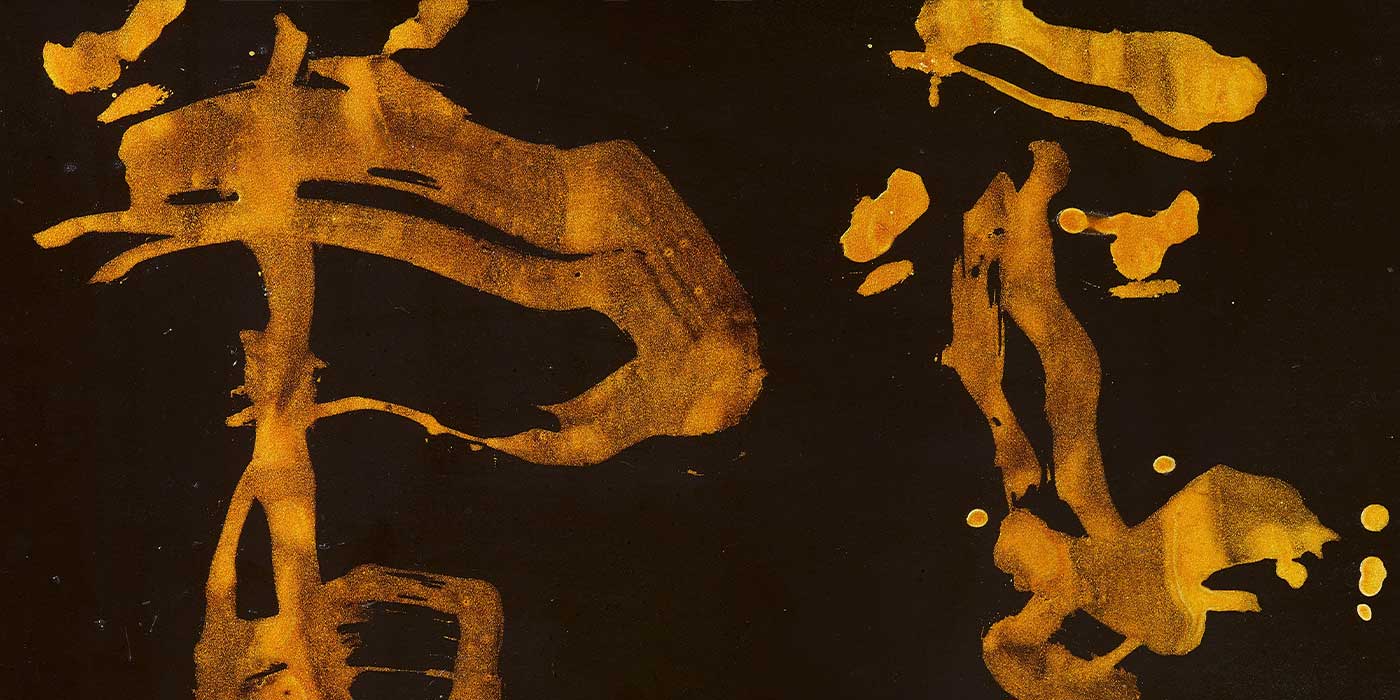
Morita Shiryū’s Heijō (Spirit of Everyday Life) from 1964 is a seminal work of modern Japanese calligraphy. The characters, executed in powerful cursive script using aluminium paste on black paper, create a striking three-dimensional effect thanks to the transparent varnish coating.
Morita, co-founder of the influential Bokujinkai group, combined Western abstraction with the expressive depth of calligraphy. The work is signed, dated and labelled on the reverse, and is preserved in its original frame. Estimated price: €15,000 to €20,000.
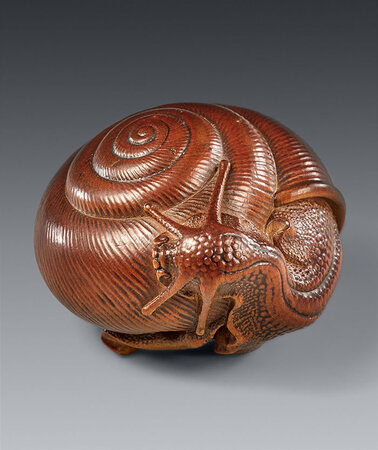
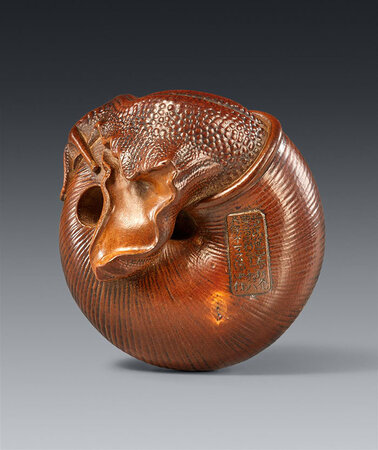
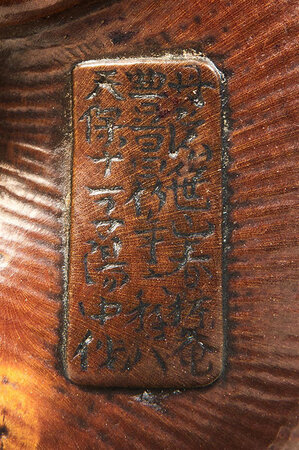
Japanese netsuke are steeped in a long tradition, and Shunshōan Toyomasa is one of the great masters of this artform. An exceptional piece by his hand is the large boxwood snail, signed and dated 1840. The combination of the finely ribbed snail shell and the sculpturally rendered, pitted skin, carved using the ukibori technique, creates a fascinating textural effect. The piece is one of only six known examples of this motif by Shunshōan Toyomasa and, with an estimate of €22,000 to €26,000, stands at the forefront of the, as always, extensive selection of netsuke.
Contact
Jan Bykowski
Press and PR
bykowski@lempertz.com
Tel. 0049 (0)221 925729 -57
Auction Dates
Auction
Saturday 13 June 2026 | 11 am
India / Persia / Southeast Asia | Lot 1 – 57
Tibet / Nepal | Lot 58 – 126
China | Lot 127 – 196
Japan | Lot 200 – 336
Preview
Saturday 6 – Sunday 7 June | 11 am – 4 pm
Monday 8 – Friday 12 June | 10 am – 5:30 pm
_______________________________________________
ASIAN ARTS ONLINE
Auction 1295
Thursday 4 June – Thursday 18 June 2026
Catalogue
Auction
Saturday 13 June 2026 | 11 am
India / Persia / Southeast Asia | Lot 1 – 57
Tibet / Nepal | Lot 58 – 126
China | Lot 127 – 196
Japan | Lot 200 – 336
Preview
Saturday 6 – Sunday 7 June | 11 am – 4 pm
Monday 8 – Friday 12 June | 10 am – 5:30 pm
_______________________________________________
ASIAN ARTS ONLINE
Auction 1295
Thursday 4 June – Thursday 18 June 2026
Catalogue