The Art of the Table: Lempertz meets KPM Berlin
Porcelain has been at the centre of social gatherings for centuries. Festive tables, where people enjoy food together and celebrate the art of presentation, are currently experiencing a stylish comeback, bringing the delicate material of porcelain back into the spotlight.
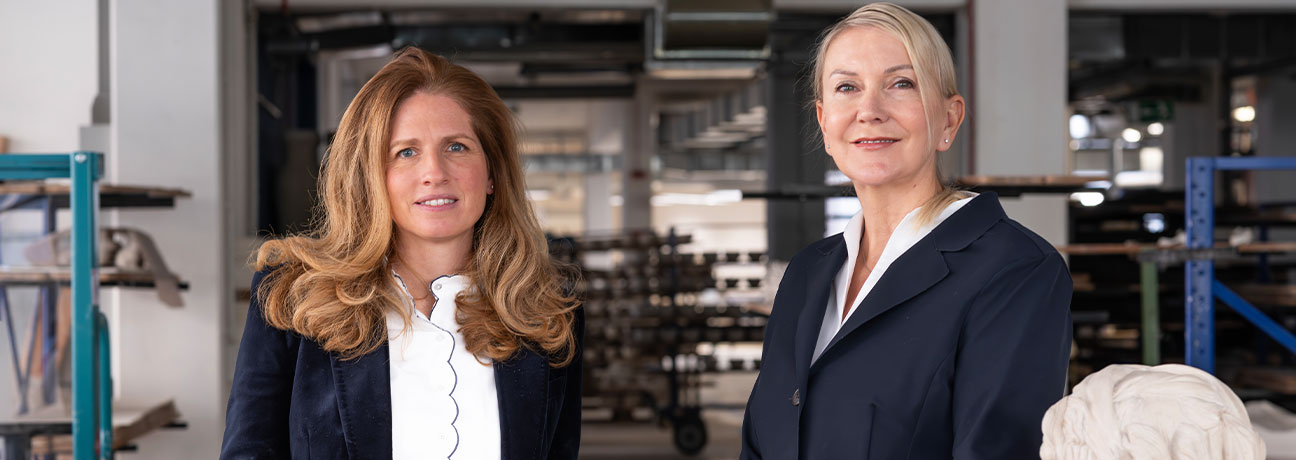
As early as the 18th century, the Royal Porcelain Manufactory founded by Frederick the Great supplied discerning hosts with porcelain that transformed every table into a work of art. Even today, each piece is painstakingly handcrafted in the manufactory, which is still based in Berlin. Historical forms and decorations remain an integral part of the range and serve as a source of inspiration – be it the playful, organic designs of Frederician Rococo, the the simple, elegant design language of early Berlin Classicism, or the clear, understated aesthetics of the Bauhaus. Alice Jay von Seldeneck, Head of Lempertz in Berlin, meets with Martina Hacker, managing director of KPM, for a tour of the manufactory.
Dear Ms Hacker, which porcelain items do you think belong on a table set for a special occasion today?
For me personally, I would include soup bowls, tureens, étagères and vases alongside charger plates and dinner plates.
At Lempertz, we have noticed that decorative objects for the table are becoming increasingly important for collectors and for stylish occasions. Which historical designs are experiencing a Renaissance at your factory, and why?
Such Renaissance moments arise from the desire for stability and tradition in fast-moving times. Our oldest decor, Kurland, was designed in 1790 and continues to embody timeless elegance with clear lines to this day.
Which motifs are particularly sought-after?
Relief borders and gilt edges, which were for may years thought to be ‘too much’, are now considered elegant and luxurious again. Floral designs can also appear surprisingly fresh in modern colour schemes.
Lempertz is regarded internationally as the leading auction house for 18th-century KPM porcelain. What role does this market presence play for you?
The auctions at Lempertz contribute significantly to the perception and value development of historical KPM pieces. The manufactory sees this as a strengthening of its cultural presence, as auctions appeal to international collectors and museums. Historical pieces are thus not only traded, but also established as cultural assets.
Which techniques from the 18th and early 19th centuries particularly impress you?
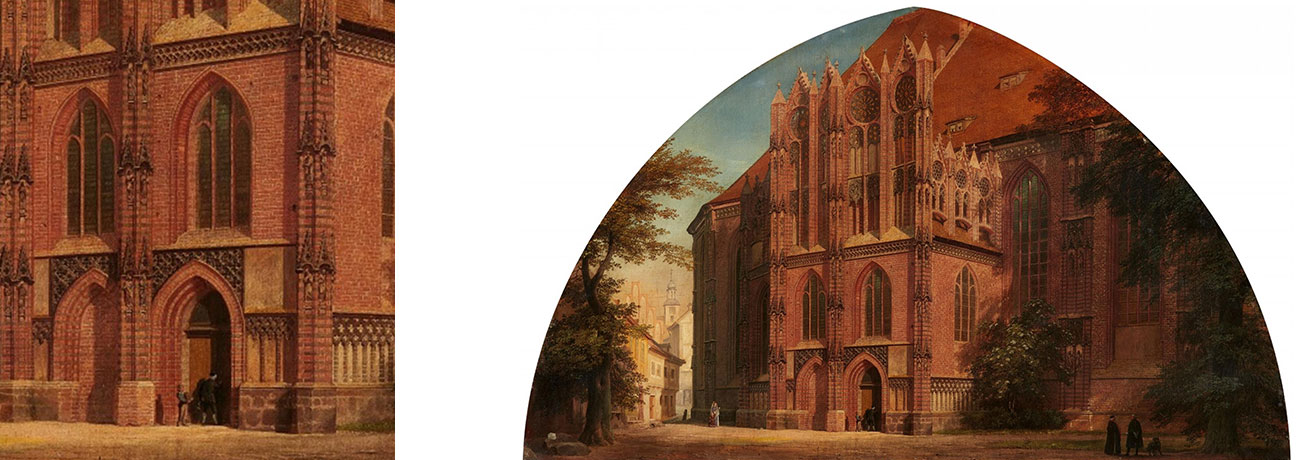
I am always amazed by the detailed and colourful landscapes and cityscapes of the early 19th century based on paintings by Eduard Gaertner and Carl Daniel Freydanck, who were both former employees of the manufactory. These are outstanding examples of the high level of craftsmanship that the manufactory stands for.
And have these objects retained their significance for KPM over the centuries? These early pieces continue to shape KPM‘s identity as a manufacturer of handcrafted products to this day. In our auctions, we are seeing growing demand for high-quality individual items. What trends and aesthetic preferences are you currently observing among your customers – and how do they differ from historical trends?
Minimalist series such as LAB represent modern aesthetics, and personalised pieces are in high demand. Historically, large, representati - ve services dominated, but today, high-quality individual items are more popular.
“It is such museum-quality pieces that make a visit worthwhile even if one cannot or does not want to invest € 40,000 in acquiring historical treasures.”
Christiane Meixner, Der Tagesspiegel, May 13, 2020
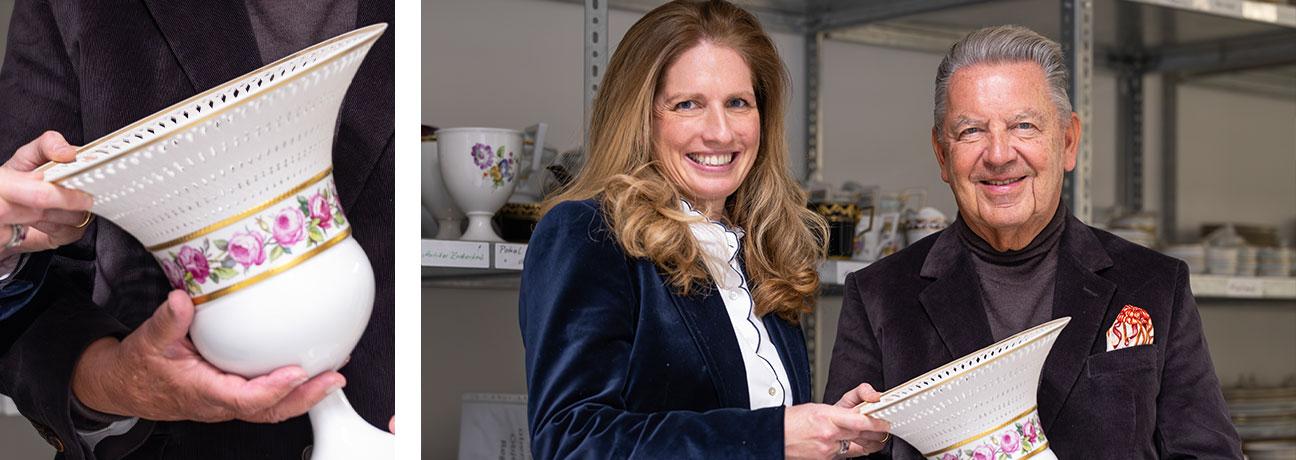
High-quality porcelain is being increasingly viewed as an investment. How does KPM assess the market: Is porcelain a stable collector‘s item and thus investment?
Porcelain’s value depends on its age, rarity, decoration and provenance. KPM sees the market as solid but selective. Only high-quality pieces retain their value in the long term.
What role do collectors play in the development of your collections?
Collectors drive demand for limited editions and anniversary pieces. Younger generations prefer functional yet iconic designs.
What does that mean for the manufactory? We are responding to this by collaborating with young designers. This allows us to reach completely different audiences. In 2026, Lempertz will celebrate the 20th anniversary of its Berlin auctions. What significance does this format have for KPM and Berlin‘s cultural identity as a centre for porcelain production?
The Lempertz Berlin auction is a fixture for KPM collectors worldwide. It boosts the visibility of the manufactory and underscores Berlin‘s role as a centre for porcelain making. On its 20th anniversary in 2026, the auction is sure to be recognised as a cultural event that combines tradition and modernity
“It has been ten years sin- ce the Lempertz art auction house in Cologne decided to open a branch on the banks of the Spree and Panke rivers. Meanwhile, the “Berlin Auc- tion,” held each spring, has become an important event for the local and international art world […].”
Thomas Kemper: Kunst und Auktionen, April 21, 2017
“For many years, we have enjoyed working with the Lempertz auction house. Characteristic features run like a common thread through all the encounters and events I have experienced:
• Passion for the beauty and quality of art from all centuries.
• The smiling personalities and dedication of all employees.
• A keen sense for the wishes, indeed the dreams, of the customers.
• Kindness and utmost reliability in dealing with all partners.
In short: The Lempertz auction house doesn‘t simply broker art from seller to buyer at its auctions. The discerning selection and the excellent quality of its offerings create a high level of trust and thus a strong bond and satisfaction on both sides!”
Wilhelm von Boddien, Managing Director, Friends of the Berlin Palace Association, and lover of Prussian art
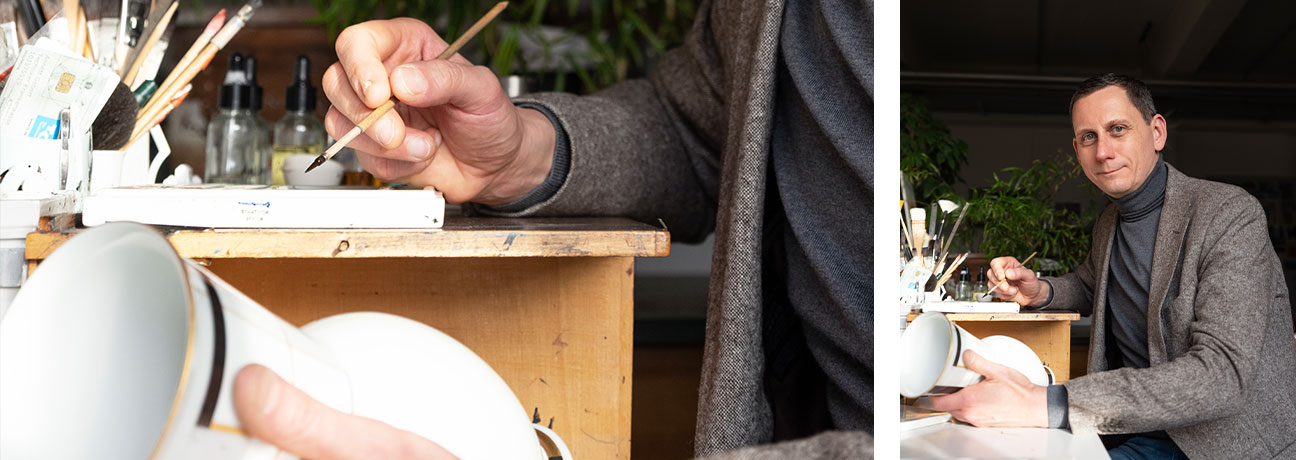
Matthias Dotschko is head of master painting at KPM in Berlin. Alice Jay von Seldeneck, director of Lempertz in Berlin, talks to him about trends and traditions in porcelain painting.
Dear Mr Dotschko, you are a regular visitor to our previews and auctions. How do you feel when you see objects that may have been in a private collection for decades and are suddenly on display again for everyone to admire? Can we still surprise you?
Surprise me? Of course! Every visit or preview is like a visit to a temporary museum, or rather - and please don‘t get me wrong - like visiting a cabinet of curiosities. The advance announcements are one thing, but actually seeing the artworks in person is something truly special.
When you see an 18th-century KPM object at auction, what do you recognise in it that is still relevant to your work today, and what do you consciously no longer recognise?
Each piece contains or features a special decoration or expressive, distinctive style of painting. Even though we can no longer copy these 1:1 today, although my colleagues would love to do so, we see and discover many unique brushstrokes and techniques used by the craftspeople of that time that we can then adopt and apply to new paintings today.
Sometimes porcelain objects remain present in the minds of former owners as memories or objects of desire, as in the case of a customer who was determined to find a vase he had once sold. Is there a piece of porcelain that holds such appeal for you personally?
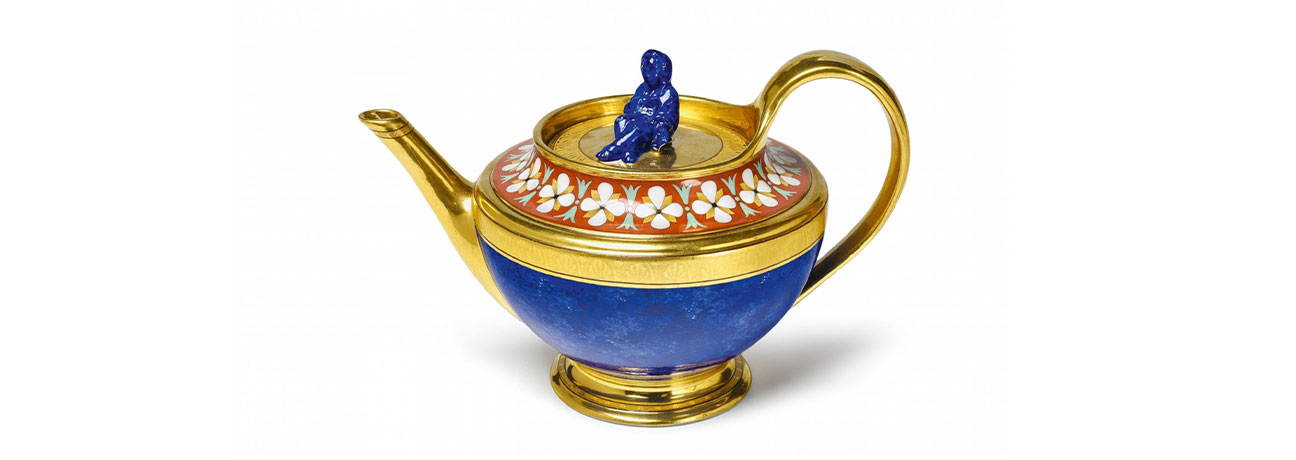
That‘s a difficult question. It brings me back to the cabinet of curiosities: You actually find everything in it beautiful. But when I think more carefully, I remember and have grown particularly fond of pieces with faux lapis lazuli ground accented with gold, and of porcelain with imitation stone décor in general.
I am particularly fascinated by the interiors depicted in 18th-century porcelain painting. How do you perceive this narrative imagery today?
On the one hand, they are important examples of craftsmanship from a bygone era, but for us as porcelain painters, they are models created by our professional forebears. These works of art sharpen and train our eye. At the same time, they remind us of the great craftsmanship that was able to develop under very different and much more difficult technical conditions.
Auction Dates
Auction
Saturday 25 April 2026
11 am | Lot 1 – 250
2.30 pm | Lot 250 – 351
Preview
Opening Reception
Friday, 17 April | 6 pm
Saturday, 18 April | 11 am – 5 pm
Sunday, 19 April | 11 am – 5 pm
Monday, 20 April | 10 am – 5 pm
Tuesday, 21 April | 10 am – 5 pm
Wednesday, 22 April | 10 am – 5 pm
Thursday, 23 April | 10 am – 5 pm
Friday, 24 April | by appointment
Catalogue