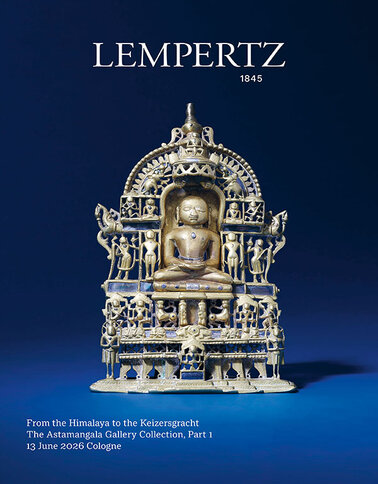
Lhakhang Keizersgracht
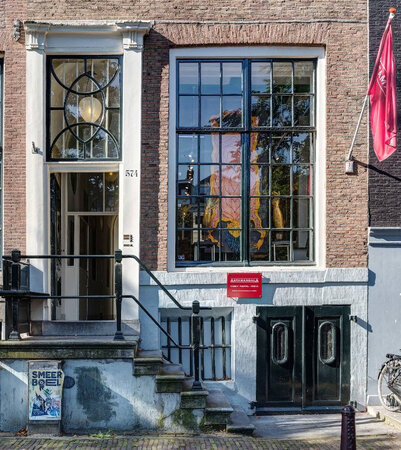
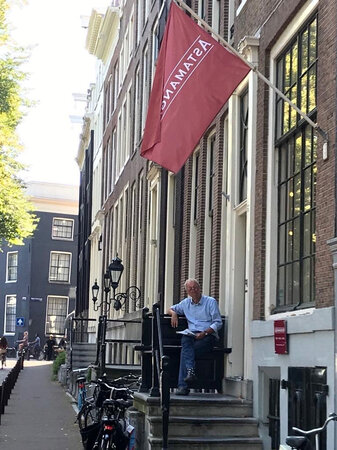
At Keizersgracht 574 in Amsterdam, Gallery Astamangala reveals itself with quiet distinction. A modest red sign marks the life’s work of Sjoerd de Vries (1952–2025), who from 1978 onwards devoted himself to sharing knowledge and appreciation of Buddhist and Hinduist art with European audience. Based on decades of travel, study, and collecting across the Himalayan regions, the gallery became both a place of trade and of encounter. Anyone who took the trouble to climb the seven steps – not only a safety feature of a canal house, but, given the number, a subtle hint to the seven stages of enlightenment – could sense de Vries’ almost missionary zeal entering what felt like the westernmost Himalayan temple.
De Vries grew up in Amersfoort, the son of a history teacher and a children’s book illustrator. He studied History of Art and Archaeology in Amsterdam before turning to Asian Studies. Under the guidance of Ronald Poelmeijer and Nandana Chutiwongs, he completed a thesis on the monastery Bsam dKar dGon Pa in Ladakh.
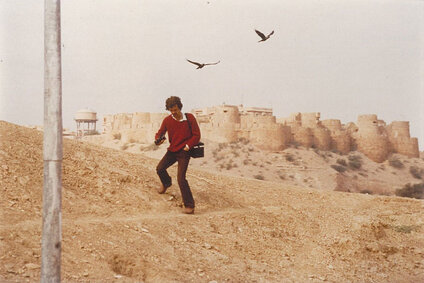
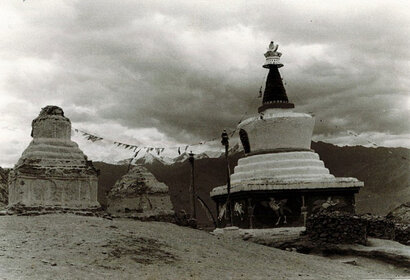
Extensive travels in the early 1970s took him through the Middle East and Afghanistan, where he developed a lasting fascination with local cultures and textiles. After visiting Ladakh in 1975, newly opened to foreigners, he turned his focus decisively toward the Himalayas. Working as a tour guide across Mongolia, China, Tibet, Nepal, and India, he combined travel with study - documenting, observing, and engaging closely with local communities. Hinduism and Tibetan Buddhism became central to his interests, though he remained a convinced atheist.
In 1978, a successful exhibition of Tibetan thangkas in Amsterdam marked the beginning of his career as a dealer. A year later, he opened his first gallery, named Astamangala, moving in 2013 to Keizersgracht. The gallery, with its quiet, contemplative atmosphere, reflected his approach: a focus on iconography, rarity, and cultural meaning.
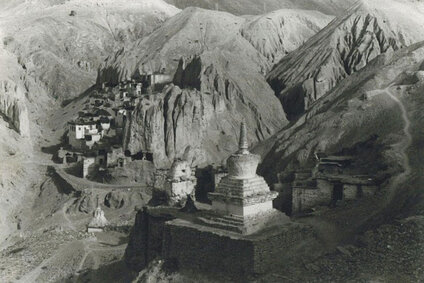
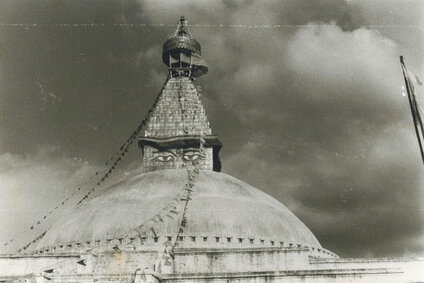
Over time, Astamangala gained an international reputation, attracting collectors, institutions, and members of Buddhist communities. Major museums in Europe and the United States were among its clients. Beyond dealing, the gallery became a place of exchange in which objects were not only sold but understood within their cultural and religious contexts.
Alongside his work, de Vries published widely and contributed to scholarly and ethical discussions on the art trade. His books Boeddhisme voor beginners (1994) and Hindoeïsme voor beginners (1996) remain important introductions to these traditions written in Dutch.
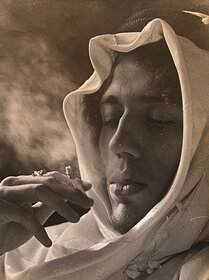
For over four decades, Sjoerd de Vries’ inexhaustible curiosity for Himalayan cultures drove him to sustain a successful gallery and establish a respected name among collectors and researchers alike. In the field he remained a knowledgeable enthusiast and an ambassador for Tibetan culture, as well as a dealer. He was keen to understand and convey the objects within their cultural context – inviting those who climbed the seven steps into Astamangala to enter his temple of attention and dedication.
Auction Dates
Auction
Saturday 13 June 2026 | 11 am
India / Persia / Southeast Asia | Lot 1 – 57
Tibet / Nepal | Lot 58 – 126
China | Lot 127 – 196
Japan | Lot 200 – 336
Preview
Saturday 6 – Sunday 7 June | 11 am – 4 pm
Monday 8 – Friday 12 June | 10 am – 5:30 pm
_______________________________________________
ASIAN ARTS ONLINE
Auction 1295
Thursday 4 June – Thursday 18 June 2026
Catalogue