20 Jahre Berlin-Auktion
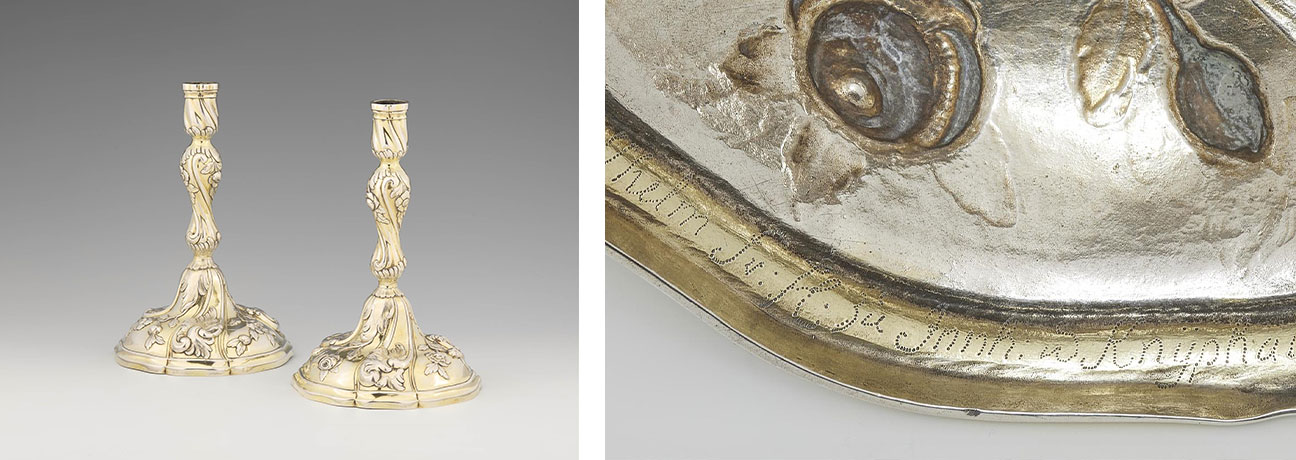
The Berlin Auction entered the art market scene with its premiere on 27th May 2006. 290 lots came under the hammer, including Berlin faience with blue Chinoiserie decoration, finely cut Bohemian glass, a pair of Berlin candlesticks by Hermann Neupert II, KPM plates made for Empress Joséphine Bonaparte, works in cast iron (‘Fer de Berlin’), trumpeting elephants and trotting donkeys by August Gaul, and smoking women by Heinrich Zille. From the very beginning, this diverse range of offerings reflected what has come to characterise the auction to this day: A vivid panorama spanning three hundred years of Berlin’s artistic and cultural history. The 2005 move of the branch from Linienstraße to the building in the Nikolaiviertel, built in 1870, and thus the acquisition of a lightflooded, 300-square-metre auction hall, opened up new possibilities. With its focus on porcelain, the Berlin Auction quickly became a fixtu - re of Berlin‘s spring art season.
From the outset, the content was curated by renowned experts such as Dr Ingrid Gilgenmann, Karl Schoenefeld and Dr Mariana Mollen - hauer de Hanstein. Their expertise in porcelain, silver, paintings and drawings sharpened the auction‘s profile and ensured its scholarly credibility. Many consignors and collectors have been involved in the format for years - not least because of the consistent expert support and willingness to investigate even the most complex object histories. One spectacular result back in 2007 sent out an early signal: A Medici vase from KPM depicting a battle scene and a view of Blücherplatz in Breslau exceeded its estimate of €18,000 - €20,000 many times over, fetching €105,000. Such exceptional hammer prices signalled early on that the Berlin auction would become a venue for market-defining results.
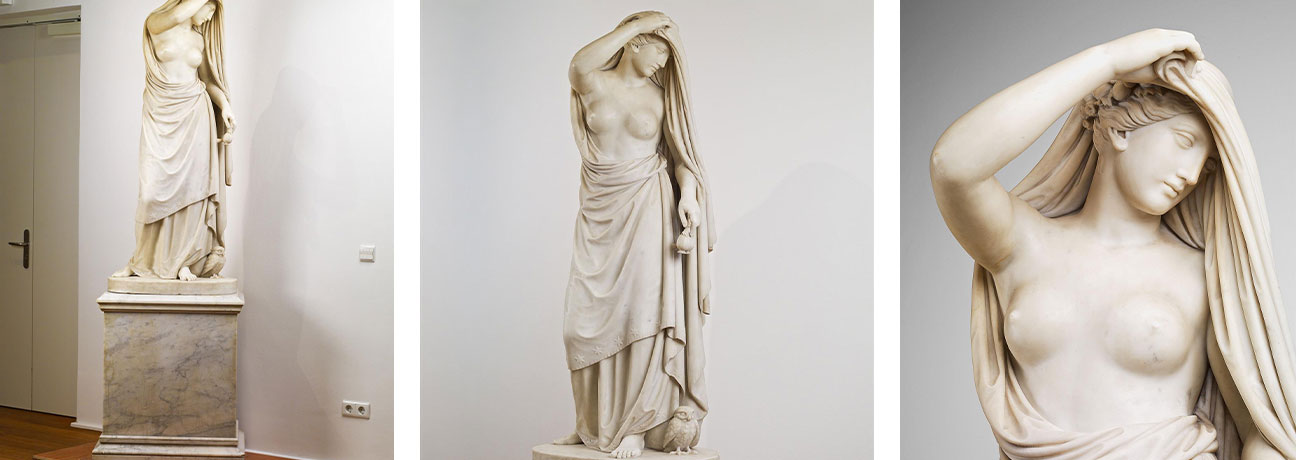
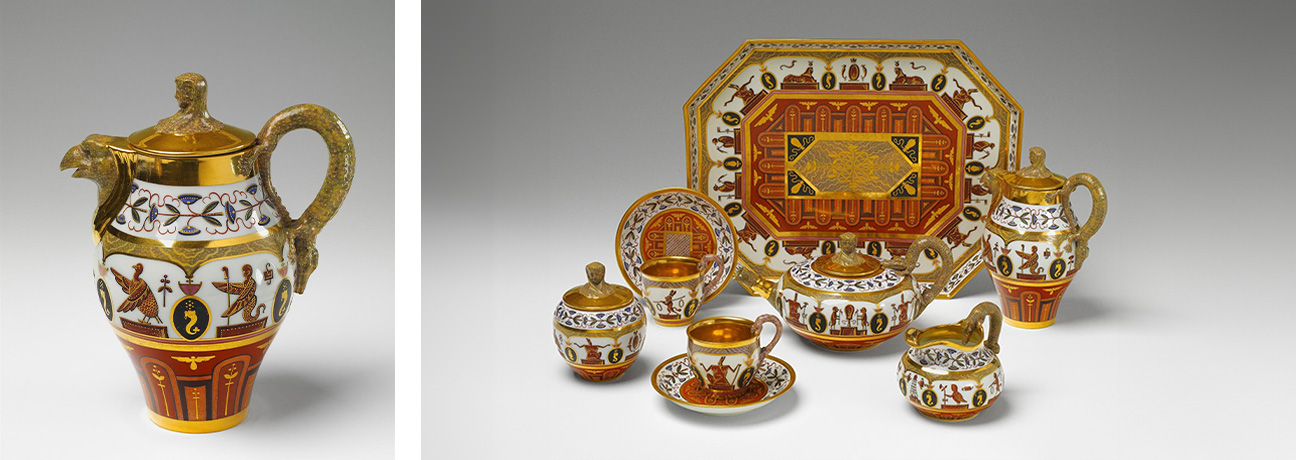
In 2016 and 2017, particularly rare Classicist services took centre stage: In 2016, a tête-à-tête with Egyptian-style decor doubled its estimated value to fetch €64,000. In 2017, a six-piece service with delicate micro-mosaic paintings and imitation pietra dura caused a sensation. Achieving €124,000, the result exceeded the estimated value by around ten times. Also in 2017, a vase of the ‘Munich variety No. 3’ with views of the Berlin Opera House and the theatre designed by Karl Friedrich Schinkel fetched €130,000. It was not only porcelain that commanded record prices: The Carrara marble sculpture Die Nacht (The Night), an early work by Berlin sculptor Emil Wolf, sold for €124,000 - making it the third six-figure result in the same auction.
A further milestone followed in 2018: New York businessman Richard Baron Cohen chose Lempertz to auction off large parts of his in - ternationally acclaimed porcelain collection, The Twinight Collection, which had previously been exhibited at the Metropolitan Museum and Charlottenburg Palace. The collection was considered the most im - portant private collection of early 19th-century porcelain and brought together top pieces from Berlin, Sèvres and Vienna. Among its high - lights was a vase of the ‘Munich Type No. 2’ with eight views of Berlin, which depicted buildings that have since been lost to history, such as Schinkel‘s Bauakademie. This cultural-historical document and former gift to Crown Prince Maximilian II fetched €275,000.
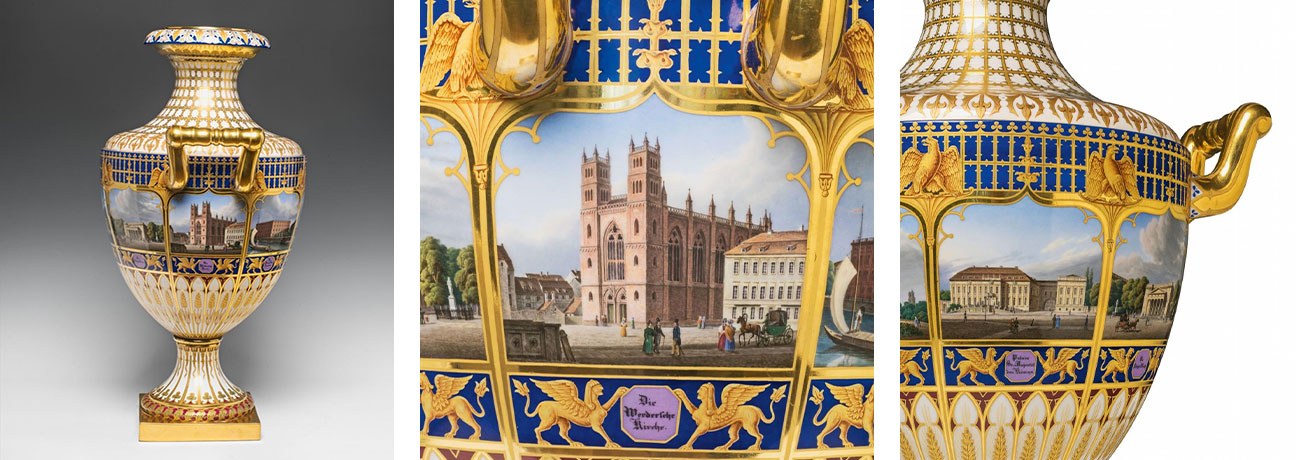
From 2018 to 2023, the format appeared under a new name: The Prussian Sale. The use of a thematic structure based on Prussian history turned the auction catalogues into art-historical voyages of discovery. Leafing through the pages takes you on a journey through the ages; a curatorial approach that remains a unique selling point in the auction world of Lempertz to this day. More recently, the emphasis has shifted without changing the auction’s core values. In addition to porcelain, other categories have increasingly attracted the attention of buyers, leading to high prices: Paintings from the Berlin Secession - such as those of Walter Leistikow and Philipp Franck - as well as works by Eduard Gaertner and Wilhelm Brücke. Added to this were works on paper by Adolph von Menzel and Anton von Werner, precious snuff boxes, fine cast iron pieces by Siméon Pierre Devaranne and Leonhard Posch, as well as decorative art objects based on Schinkel‘s designs or from the Werner & Mieth bronze factory.
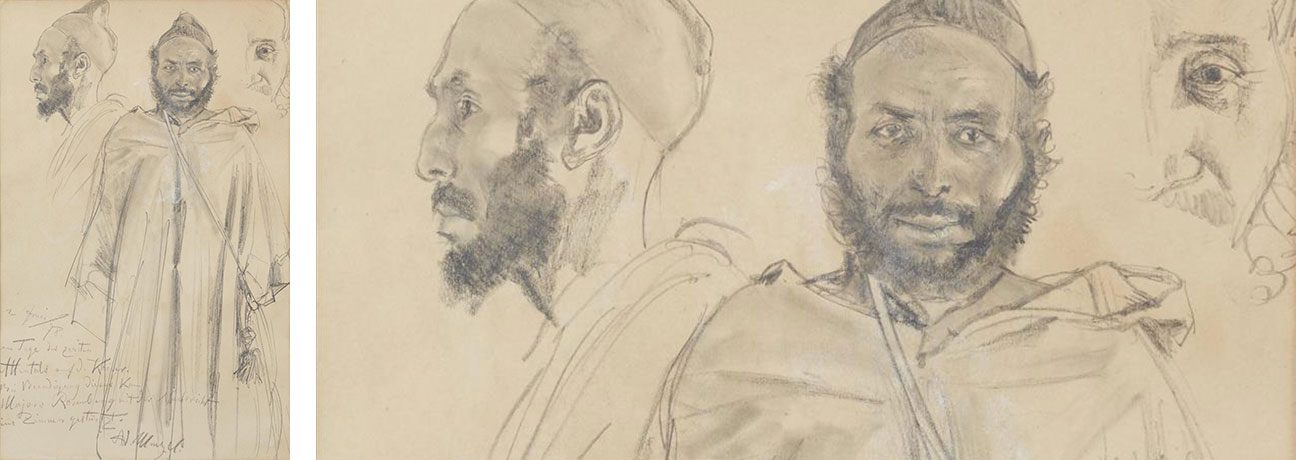
In 2024, a portrait study of the first Moroccan ambassador in Berlin by Adolph von Menzel achieved a staggering €200,000; a record result for a drawing by the artist. This development shows how broad collectors‘ interests have become and how much the audience has rejuvenated and diversified. Twenty years after its first sale, the Berlin auction is much more than just a fixed date in the art market calendar. It reflects the ongoing reexamination of the art of Prussia and Berlin as well as cultural history in the medium of the market, and combines scholarly cataloguing with strategic curiosity. In doing so, it remains true to its guiding principle: To make Berlin known not only as a geographical location, but also as a cultural sounding board.
Text by Nelly Feldheim
Auction Dates
Auction
Saturday 25 April 2026
11 am | Lot 1 – 250
2.30 pm | Lot 250 – 351
Preview
Opening Reception
Friday, 17 April | 6 pm
Saturday, 18 April | 11 am – 5 pm
Sunday, 19 April | 11 am – 5 pm
Monday, 20 April | 10 am – 5 pm
Tuesday, 21 April | 10 am – 5 pm
Wednesday, 22 April | 10 am – 5 pm
Thursday, 23 April | 10 am – 5 pm
Friday, 24 April | by appointment
Catalogue